



How to Relieve a Tension Headache Without Medication
Key Takeaways
- Using over-the-counter pills too often frequently triggers medication overuse headaches, making your skull pressure worse over time.
- Applying targeted cold packs or gentle neck stretches can quickly stop a muscle contraction headache at home.
- Adjusting your desk setup to prevent forward head posture stops the chronic upper back strain that feeds head pain.
- Drinking enough water and maintaining a steady sleep schedule directly reduces the frequency of stress-induced head discomfort.
- Focused spinal adjustments target the root physical triggers of head pain to provide long-term, lasting relief.
A tension headache feels like a tight band squeezing your skull, and it can completely ruin your day. This dull, aching pressure often starts at the back of your neck and crawls forward, making it incredibly hard to focus on work or enjoy your time with family.
Relying on over-the-counter pain relievers can lead to rebound headaches, which professionals call medication overuse headaches. The Canadian Headache Society notes that taking pain pills more than two days a week can actually cause more frequent head pain. Fortunately, you do not need a pill bottle to get relief, as simple physical adjustments can release the tension right now.
What Does a Tension Headache Feel Like?
Identifying the exact signs of this issue helps you choose the right non-pharmacological headache remedies. Recognizing how the muscles around your braincase react to pressure ensures you do not mistake it for a migraine.
- Constant dull aching: You will notice a steady, non-throbbing ache on both sides of your skull. Unlike migraines, this discomfort does not pulse with your heartbeat, but it creates a heavy, draining sensation that persists throughout the afternoon.
- Tight band pressure: Many individuals experience a squeezing sensation that feels like a vice tightening around their forehead. This specific tension headache symptom spreads across the brow line and can extend down into the temples, causing mild sensitivity to touch.
- Neck muscle tenderness: The muscles at the base of your skull and along your upper shoulders often feel sore and knotted. Pressing on these areas can trigger sharper discomfort that radiates upward into your scalp, indicating high muscle tightness.
- Mild light sensitivity: While you will not experience severe nausea or visual auras, bright overhead office lights might make your eyes feel tired. This subtle discomfort makes computer work uncomfortable but does not force you to sit in a pitch-black room.
What Physical Fixes Can You Try for Immediate Relief?
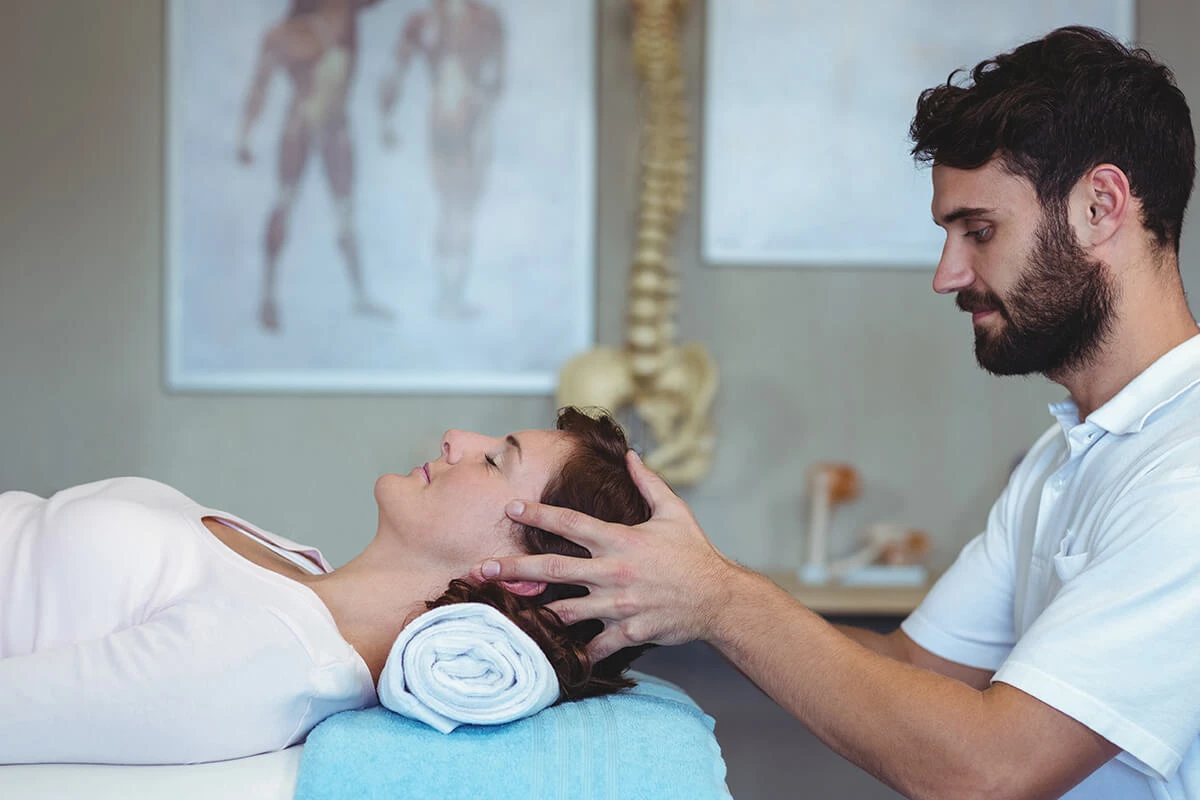
When an attack happens, you can use quick physical methods to soothe the tight nerves and muscle strands. These natural headache relief techniques focus on relaxing the upper body structures immediately.
- Targeted cold therapy: Place an ice pack wrapped in a cloth at the base of your neck for fifteen minutes. The cold temperature numbs the local nerves and slows down blood flow, which rapidly reduces the sharp throbbing and muscle spasms.
- Suboccipital muscle release: Place two tennis balls in a sock and lie down on your back with the balls resting right under the base of your skull. Let the weight of your head apply gentle pressure to dissolve stubborn cervicogenic muscle knots.
- Chin tuck stretches: Sit up straight, look forward, and slowly draw your chin straight back as if making a double chin. Hold this position for five seconds to stretch the tight joints and alleviate headache pressure behind the eyes caused by poor posture.
- Temporal self-massage: Move your fingertips in slow, circular motions over your temples and across your forehead for three minutes. This action boosts local blood circulation and coaxes the tight pericranial muscles into a state of deep, soothing relaxation.
- Warm shower therapy: Let warm water run directly over your neck and upper back for ten minutes during an episode. The heat increases blood flow to tight tissues, which helps loosen up the stiff joints that feed into your chronic daily headache patterns.
- Diaphragmatic breathing drills: Place one hand on your belly and breathe in slowly through your nose for four seconds, expanding your stomach. Exhale slowly through your mouth to lower your heart rate and turn off the body's physical stress responses.
What Everyday Lifestyle Changes Can Melt the Tension Away?
Long-term management requires altering the daily habits that cause your muscles to tighten up in the first place. These adjustments build a resilient body that is less prone to stress-induced head discomfort.
- Consistent hydration tracking: Drink at least two litres of water daily to keep your tissues healthy and pliable. Dehydration shrinks blood volume, which reduces the oxygen supply to your brain and triggers a tension-type headache before you even realize you are thirsty.
- Rigid sleep scheduling: Go to bed and wake up at the exact same time every single day, including on weekends. Erratic sleep patterns disrupt your brain chemistry and make your nervous system highly sensitive to minor physical stressors and muscle aches.
- Ergonomic workstation alignment: Adjust your office chair so your knees sit at a ninety-degree angle and your computer screen rests at eye level. This setup eliminates the constant slouching that causes poor posture headache triggers throughout your standard eight-hour workday.
- Regular dietary pacing: Eat small, balanced meals every four hours to keep your blood sugar levels completely stable. Skipping meals causes your glucose levels to plummet, which forces your neck muscles to clench up as an automatic stress response.
- Daily screen breaks: Follow the twenty-twenty-twenty rule by looking at an object twenty feet away for twenty seconds every twenty minutes. This simple habit stops eye strain, which directly prevents muscle contraction headache pain from developing during long office tasks.
How Do You Prevent Tension Headaches Before They Start?

Proactive habits keep your nervous system calm and prevent structural imbalances from locking up your upper frame. Focus on these preventative measures to enjoy more pain-free days.
- Incorporate magnesium foods: Eat more spinach, almonds, and pumpkin seeds to keep your daily magnesium levels high. This essential mineral regulates nerve function and prevents the involuntary muscle spasms that often lead to a severe tension headache episode later.
- Daily shoulder rolls: Roll your shoulders backward in smooth circles ten times every hour you spend sitting down. This movement breaks up static muscle tension in the trapezius area, stopping tightness from traveling upward into your cervical spine.
- Limit caffeine intake: Keep your daily coffee consumption to one or two cups at the exact same hour each morning. Sudden drops in caffeine levels cause your blood vessels to expand rapidly, which triggers a painful caffeine withdrawal headache.
- Gentle evening yoga: Spend ten minutes doing gentle yoga poses like the Child’s Pose before going to sleep. This practice elongates your spine and releases the structural stress your body collected during the daytime hours, ensuring relaxed muscles overnight.
- Routine chiropractic checkups: Visit a practitioner regularly to identify and correct minor misalignments in your neck vertebrae. Keeping your spine aligned removes mechanical stress from your nervous system, which dramatically lowers your overall headache frequency and intensity.
Overcoming head pain does not mean you have to rely on a continuous cycle of medication. By identifying your specific physical triggers and using natural methods like massage, heat therapy, and posture correction, you can control your symptoms safely. Statistics from Statistics Canada show that millions of citizens experience chronic head pain yearly, yet many find lasting relief by focusing on structural health rather than temporary chemical fixes. Taking care of your spine and muscles stops the pain before it can disrupt your life.
Working with a professional helps you find and fix the exact spinal imbalances causing your muscle strain. If you are ready to live without constant skull pressure, the team at Urban Care Chiropractic can help you build a personalized wellness plan. Give your body the support it needs to stay healthy and relaxed. Contact us at (312) 841-5500 now.